
Introduction
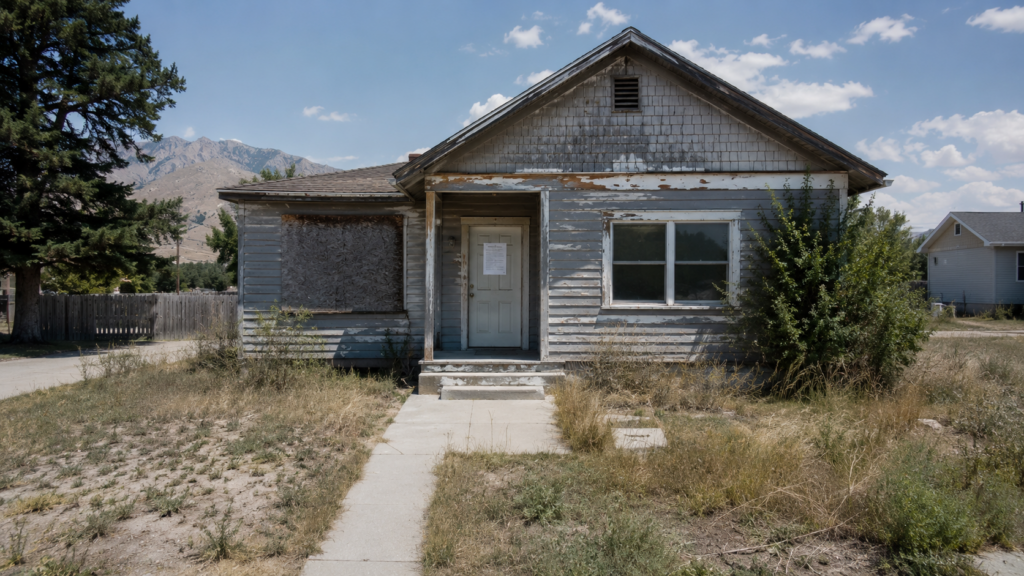
Dealing with a property that has been condemned can feel overwhelming, especially when you are trying to understand what comes next.
The process can involve repairs, notices from local officials, deadlines, inspections, and important decisions about what makes the most sense for your situation.
For many homeowners, the main concern is not just the legal process. It is figuring out the most practical path forward. In some cases, that may mean working to clear the issues.
In others, it may mean appealing the decision or exploring the option to sell the property as-is.
In this article, you will learn how condemned properties are usually handled in Idaho, what steps may be required to remove condemnation, and what options you may have if fixing the property is not realistic.
What Does a Condemned Property Mean in Idaho?
In Idaho, a condemned property is usually a house or building that a local authority has found and deemed unsafe, unhealthy, or not suitable for occupancy.
This usually happens when the property has serious structural, safety, sanitation, or nuisance-related problems.
While Idaho has statewide laws related to building-code authority and public health, the actual enforcement process is usually handled at the local level, which means the exact steps can vary by city or county.
Why Condemnation Is Usually Handled Locally
In most cases, condemnation is handled by the city or county, not through one single statewide process for every property.
Idaho’s building-code framework allows local jurisdictions to adopt and administer enforcement rules by ordinance, which is why timelines, notices, and enforcement steps may differ depending on where the property is located.
Which Local Authorities May Be Involved
Several local departments may be involved, depending on the problem.
A building department may handle structural and permit-related issues, code enforcement may address property-condition violations, the fire department may step in when there are fire or life-safety hazards, and the health district may become involved when there are water supply, sanitation or public health concerns.
Can You Remove Condemnation From a Property in Idaho?

Yes, in many cases, condemnation can be removed from a property in Idaho, but the exact process is usually controlled by local city or county ordinances rather than one single statewide procedure.
In general, the owner must review the notice, understand what corrections are required, complete any required repairs or approvals, and obtain clearance from the local authority handling the case.
1. Review the Notice and Local Requirements
The first step is usually to review the notice carefully, because it explains what problems were identified, what action is required, and how much time the owner has to respond.
In Idaho, these cases are often handled under local city or county ordinances, so the exact requirements can vary depending on where the property is located.
Homeowners should also check whether the notice mentions a deadline to comply, a right to request a hearing, or a chance to appeal.
In some Idaho jurisdictions, those rights come from local code. For example, Power County’s ordinance allows a person receiving a notice and order to file a written appeal within ten days.
2. Complete the Required Repairs, Permits, and Inspections
After reviewing the notice, the owner usually needs to complete the repairs or corrective work required by the local authority.
Depending on the condition of the property, that may include structural, electrical, plumbing, fire-safety, or sanitation-related work needed to bring the house back into compliance.
In some Idaho jurisdictions, clearing the property may also require permits and inspections before the work can be approved.
For example, Nampa’s official guidance says permits and inspections are required for repairing or demolishing substandard structures.
3. Obtain Final Clearance From the Local Authority
Condemnation is generally lifted only after the local authority confirms that the property now meets the required standards.
In practice, that usually means the owner must complete the required work, pass any needed inspections, and receive approval from the department or official handling the case.
Because Idaho does not use one single statewide condemnation-clearance process for every property, this final step should be understood as the usual local enforcement outcome rather than a uniform statewide rule.
The exact sign-off process can vary by city or county.
How the Condemnation Process Usually Works in Idaho
1. Property Is Inspected and Reported
In Idaho, the condemnation process usually begins when a property is reported, inspected, or otherwise flagged because of serious safety, health, structural, fire, or nuisance concerns.
After reviewing the property, the city or county may decide that formal enforcement is necessary.
If that happens, the owner is usually notified and given instructions on what must be done next.
2. Notice and Time to Respond
In most cases, the owner is given a written notice explaining the problem, the action required, and how much time is allowed to correct the issue.
Depending on the local ordinance, that may mean repairing the property, securing it, vacating it, or taking other steps to address the unsafe condition.
The exact deadline can vary by jurisdiction, which is why homeowners should review the notice carefully and follow the timeline given by the local authority.
3. Hearing or Appeal Rights
Some local ordinances also give the owner a right to request a hearing or file an appeal before further enforcement action moves forward.
That can be important if the owner disputes the condition of the property, needs more time, or wants to challenge the order.
If the problems are not corrected and no successful appeal is made, the property may be ordered repaired, vacated, secured, or demolished.
What Happens If You Ignore a Condemnation Notice?
Ignoring a condemnation notice can make the problem more expensive and harder to resolve.
The city or county may add fines or penalties, take further enforcement action, and in some cases move forward with repair, securement, or demolition if the owner does not comply.
Idaho cities can recover certain nuisance-abatement costs from the property owner, and some local codes also allow added civil or misdemeanor penalties.
If the local government steps in, those costs may be attached to the property.
That can include liens, special assessments, demolition costs, or other charges, which may create title issues and make a later sale more difficult.
Idaho law allows certain abatement costs to be assessed against the property, and unpaid amounts may be placed on the tax roll in some cases.
The longer an owner waits, the more pressure usually builds.
What starts as a notice to correct the problem can turn into higher costs, tighter deadlines, and fewer options.
Can You Sell a Condemned House in Idaho As-Is?
Yes, in many cases, you can still sell a condemned house in Idaho. A condemnation issue does not always stop a sale, but it can make the process more difficult.
Buyers may worry about repair costs, local enforcement problems, and how much work will be needed to bring the property back into compliance.
Selling on the open market is often harder because many traditional buyers rely on financing, and lenders may be reluctant to approve a loan on a property with serious safety or condition issues. On top of that, disclosure still matters.
Idaho’s Property Condition Disclosure Act generally requires sellers of residential real property to provide a disclosure form unless an exemption applies, so known problems tied to the property may still need to be disclosed during the sale.
That is why cash buyers and investors are often more common in these situations.
They are usually better prepared to handle repair risk, code issues, and distressed property conditions without relying on traditional mortgage approval.
If you do not want to repair the house yourself, selling the property as-is may be a practical option, especially when the cost, time, and stress of clearing the condemnation are more than you want to take on.
Local Rules Can Vary Across Idaho
Idaho does not have one single consumer-facing condemnation process that works the same way for every house.
In most cases, the process is shaped by local rules, which means cities and counties may use different ordinances, departments, notice procedures, and enforcement standards.
That is why timelines, notices, hearing rights, and next steps can vary depending on where the property is located.
For example, Idaho’s state building-code framework leaves local enforcement to cities and counties that adopt and administer those rules by ordinance.
You can see that local variation in places like Boise, which uses its own Dangerous Buildings Code, and Nampa, which says it uses the Uniform Code for Abatement of Dangerous Buildings, the International Fire Code, and city ordinances to regulate dangerous buildings.
Idaho Falls also handles property-condition enforcement through its own code-enforcement system, which shows that each city may organize the process differently.
Because of that, homeowners should always review the specific notice issued by their local authority and follow the instructions in that notice rather than assume the process will be the same across Idaho.
Condemned vs Uninhabitable vs Code Violations: Are these the Same?
A condemned property, an uninhabitable house, and code violations are related, but they do not mean the same thing.
A condemned property usually involves formal action by a local authority because the house has been found unsafe or not fit for occupancy.
In some cases, the condition of the home may be serious enough that you cannot live in a house safely, even if no formal condemnation order has been issued yet.
Code violations are broader and can include a wide range of issues, from minor problems to more serious conditions, without automatically meaning the property has been condemned.
| Issue | Condemned Property | Uninhabitable Property | Code Violations |
| Basic meaning | A property the local authority has formally declared unsafe or not fit for occupancy | A property that is unsafe or not suitable to live in | A property with violations of local building, health, fire, or property rules |
| Formal government action | Usually yes | Not always | Not always |
| Safe to live in | Usually no | Often no | Sometimes yes, depending on the violation |
| Can exist without condemnation | No | Yes | Yes |
| Severity level | Usually the most serious | Serious, but may not yet involve formal enforcement | Can be minor or serious |
| Main takeaway | This usually involves an official notice, order, or enforcement step | A house can be uninhabitable before it is formally condemned | A house can have code violations without being condemned |
How Liberty Fair Offer Can Help You Deal With a Condemned Property
If fixing a condemned property no longer makes sense, selling it as-is may be the simplest way forward.
Liberty Fair Offer buys houses as-is across multiple cities in Idaho, so you do not have to take on repairs, cleanup, or the long process of bringing the property back into compliance before selling.
Contact us today to see if an as-is sale could be the easiest way to move on from your condemned property.