

Yes. You can sell a large, older house and use the net sale proceeds to buy a smaller home.
The amount available depends on your sale price, mortgage payoff, property debts, taxes, repairs, and selling expenses.
Just to give you an example that you can really do this.
Zillow data we found shows an average home value of about $856,000 in Seattle and $404,000 in Spokane, a difference of roughly $452,000. This shows how selling a higher-value home and buying a less expensive one can leave more of your sale proceeds available after the next purchase.
This guide explains how to estimate your net proceeds, use them toward a smaller home, and plan both transactions.
How Much Money Will You Have After Selling Your Large, Old House?
The sale price is not the amount you receive at closing. Your mortgage, property debts, taxes, and selling costs are paid first.
What remains is your net sale proceeds, the only figure that matters for planning your next purchase.
You can estimate it this way:
Net sale proceeds = Sale price − mortgage payoff − other property debts − selling costs − buyer credits and repairs − prorated taxes and fees
What Gets Deducted from the Sale Price
Before any money reaches your bank account, the closing company pays off everything tied to the property:
- Your primary mortgage
- A second mortgage, HELOC, or home equity loan
- A reverse mortgage balance, if you have one
- Property liens, judgments, or contractor liens
- Unpaid or prorated property taxes
- Deferred property taxes, if you’re enrolled in a state deferral program
- Agent compensation
- Title, escrow, and recording fees
- State and local transfer taxes (Washington’s real estate excise tax is a significant one)
- HOA transfer or document fees
- Buyer credits and negotiated repairs
Example Net Sale Proceeds
The table below shows how sale-related deductions can reduce the amount you receive. These figures are hypothetical.
Your final proceeds will depend on your sale price, debts, taxes, repairs, and closing charges.
| Item | Example amount |
| Selling price | $650,000 |
| Mortgage payoff | −$220,000 |
| HELOC or second mortgage | −$25,000 |
| Taxes and selling expenses | −$35,000 |
| Buyer credits or repairs | −$10,000 |
| Estimated net proceeds | $360,000 |
In this example, the seller receives $360,000 after the listed debts and costs are paid.
| A Spokane Homeowner’s Story I worked with a homeowner in Spokane who had reached the point where her large house no longer fit the way she wanted to live. She decided to sell, move into a smaller home, and simplify what came next. In this video, she shares what led to that decision and what the downsizing process was like from her side. https://www.youtube.com/watch?v=zw0Uq_-wYnk |
Benefits of Selling a Large House and Moving to a Smaller Home
Selling a large house and moving to a smaller one can lower expenses and make day-to-day upkeep easier.
The financial result will vary based on the new home’s price, location, condition, and financing.
1. Release Equity from the Existing House

When your net sale proceeds exceed the amount needed to pay off the mortgage and selling costs, the remaining money becomes available for your next move.
You can use it to buy a smaller home, make a larger down payment, reduce the amount you need to borrow, cover moving or repair costs, or keep part of it for retirement and emergencies.
The equity you release is based on your net sale proceeds, not the difference between the asking prices of the two homes.
2. Reduce Maintenance and Repair Responsibilities
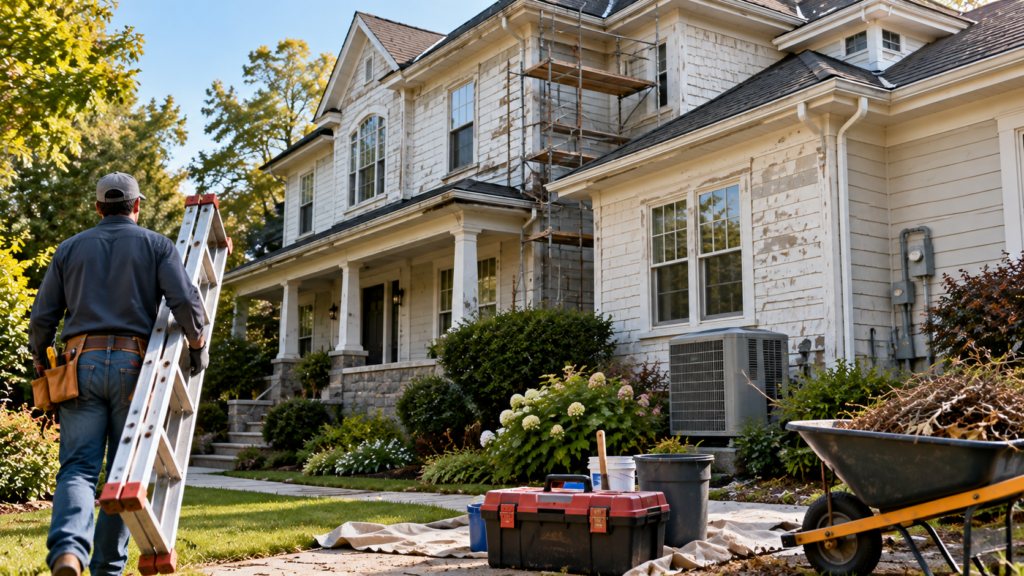
A large, older house often requires more work as the roof, exterior, plumbing, electrical system, heating, and cooling equipment age.
Yard care, unused rooms, and major replacements can add more time and expense.
A smaller home gives you less space to clean and care for, though its age and condition still affect future repair needs.
3. Lower Some Monthly Housing Costs

A smaller home can bring down mortgage payments, heating and cooling bills, insurance, property taxes, cleaning costs, yard care, and repair spending.
Still, size alone does not decide the cost.
A smaller home in a pricier area, or one with high HOA dues, can cost as much as a larger house.
How Can You Use the Sale Proceeds to Buy a Smaller Home?
Once you know your estimated net proceeds, compare that amount with what you need for the smaller home.
The right approach depends on the purchase price, financing, closing expenses, and how much cash you want to keep after moving.
Buy the Smaller Home With Cash
If your net proceeds cover the purchase price and closing expenses, you may be able to buy the smaller home without taking out another mortgage.
Do not base the decision on the purchase price alone. Leave room for moving expenses, immediate repairs, furniture changes, and a cash reserve.
Use the Proceeds for a Down Payment
If the smaller home costs more than the cash you want to put into the purchase, part of the proceeds can go toward a down payment.
You can then finance the remaining balance.
Get preapproved before relying on a new mortgage so you know how much cash you need at closing and what price range fits your finances.
Keep Part of the Proceeds in Reserve
You do not have to put every dollar from the sale into the next property.
Keeping part of the money outside the home may help cover moving expenses, repairs, medical needs, retirement expenses, or an emergency fund.
Decide how much you want to keep before setting the purchase budget.
Will You Owe Capital Gains Tax When You Sell and Downsize?
Buying a smaller home does not automatically remove capital gains tax from the sale of your current home.
Under IRS rules, qualifying homeowners may exclude up to $250,000 of gain from the sale of a main home. Many married couples filing jointly may qualify for an exclusion of up to $500,000.
The general ownership and use tests require the property to have been owned and used as a main residence for at least two of the five years before the sale.
The exclusion is based on the home sale and your eligibility under IRS rules. It is not based on spending all of your sale proceeds on another property.
Your taxable gain also depends on your adjusted basis, which can differ from what you originally paid for the house.
Steps to Sell the Large House and Buy a Smaller Home
Step 1: Estimate Your Current Home’s Value
Review recent sales of similar homes in your area.
Compare the size, age, condition, lot, updates, and repair needs with your own property. Use a realistic estimate rather than the price you hope to receive.
Step 2: Calculate Your Expected Net Proceeds
Request payoff statements for every mortgage, second mortgage, HELOC, or other debt secured by the property.
Subtract those amounts, estimated taxes, selling expenses, buyer credits, and planned repairs from your expected sale price.
The result gives you a working amount for the next purchase.
Step 3: Set Your Smaller-Home Budget
Decide how much of the proceeds you want to put into the next home.
Include the purchase price, closing expenses, moving costs, immediate repairs, and the cash reserve you plan to keep.
This prevents the next purchase from using more of your sale proceeds than you intended.
Step 4: Decide Which Transaction Comes First
Choose to sell first, buy first, or coordinate both transactions.
Your choice should match your cash position, financing, housing needs, and backup plan if the dates do not match.
Step 5: Arrange Financing If You Need It
Get preapproved before relying on another mortgage.
Confirm the amount you can borrow, the cash required at closing, and any conditions tied to the sale of your current home.
Step 6: Coordinate the Closings and Move
Confirm the sale date, purchase date, transfer of funds, moving date, utility changes, and access to both properties.
Arrange storage or temporary housing if there is a gap between the two closings.
Review the final settlement statement before selling so you know the actual amount you will receive.
Ways to Sell a Large, Fixer-Upper House Before Buying a Smaller Home
The condition of the old house, your timing, and the amount of work you want to take on can affect the way you sell it.
| Selling Option | How It Works | Best Fit For |
| Repair and list | Complete repairs or updates, prepare the house, then list it on the open market | You have time and money for the work and want full market exposure |
| List as-is | Put the property on the market without completing major improvements | You want market exposure without taking on a large renovation |
| Sell to a cash home buyer | Sell directly without depending on buyer financing | You want to avoid repairs, repeated showings, or a financing-dependent closing |
1. Repair and List the House
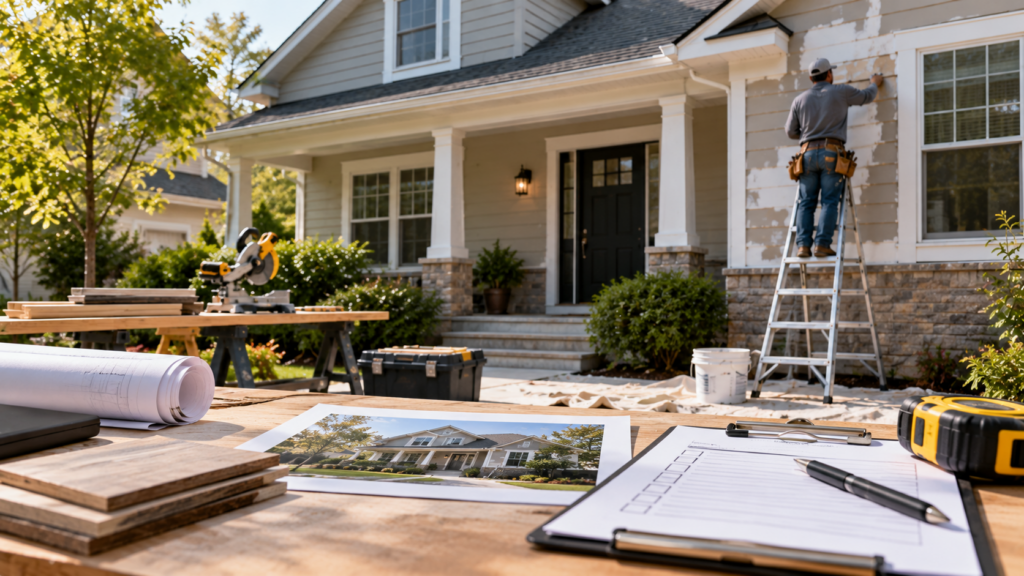
Repairing the property before listing may make sense when its condition is likely to affect buyer interest or financing.
Before starting the work, compare the expected increase in your net proceeds with the amount of money and time the repairs require.
Some improvements may make the home easier to sell without returning every dollar spent.
2. List the House As-Is
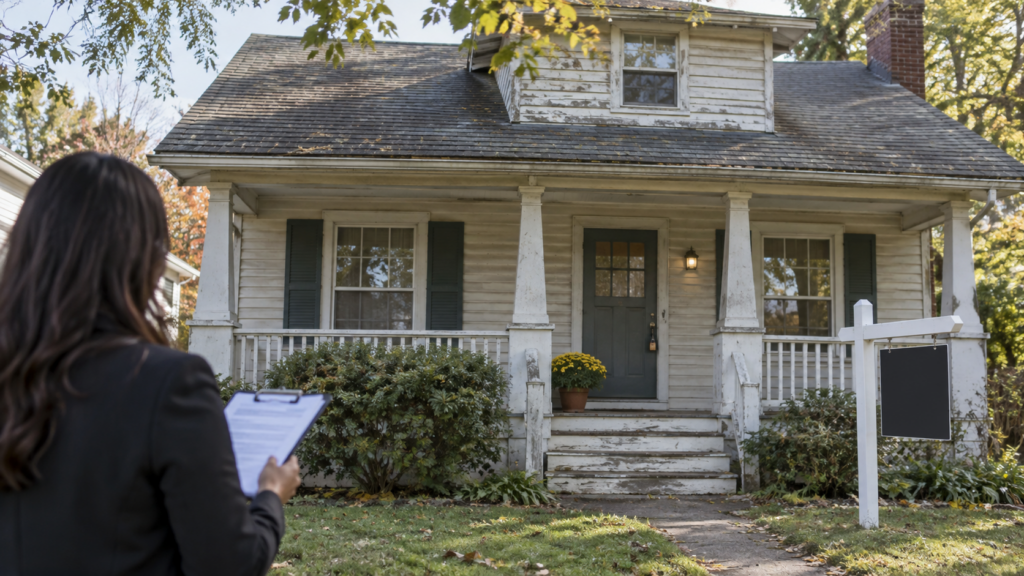
An as-is listing lets you put the property on the market without completing major improvements first.
You may still deal with inspections, buyer requests, showings, appraisal problems, or financing issues tied to the condition of the house.
Compare the likely net proceeds and sale timeline before choosing this route.
3. Sell Directly to a Cash Home Buyer
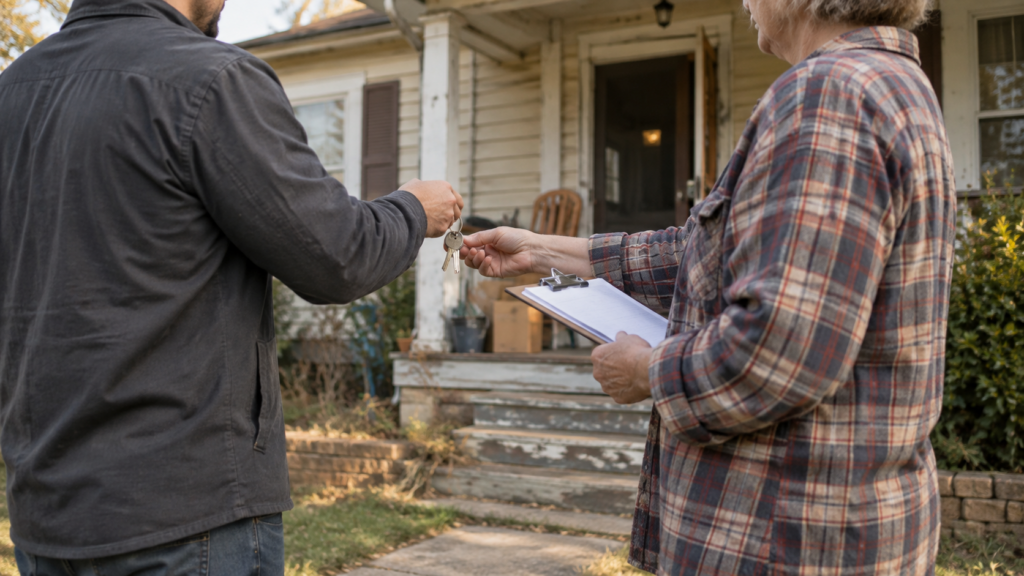
A direct cash sale may fit an older, outdated, damaged, or heavily cluttered house when you do not want to complete repairs or prepare the property for repeated showings.
It can also remove the buyer-financing step from the transaction.
Compare the cash offer with the estimated net proceeds and timing of a traditional listing. Focus on what you would actually receive and how the closing date fits your smaller-home purchase.
Conclusion
Selling a large, older house can provide the money needed to purchase a smaller home.
Your next step depends on the net proceeds, the cost of the new property, and how quickly you need both transactions completed.
Sell Your Large, Old House to Liberty Fair Offer
Liberty Fair Offer buys houses as-is across Washington and Idaho. You can sell without completing repairs, clearing every room, or preparing the property for repeated showings.
Request a cash offer and compare the net amount and closing date with a traditional listing to decide which route better supports your move to a smaller home.
Contact us to discuss your property and request a cash offer.