
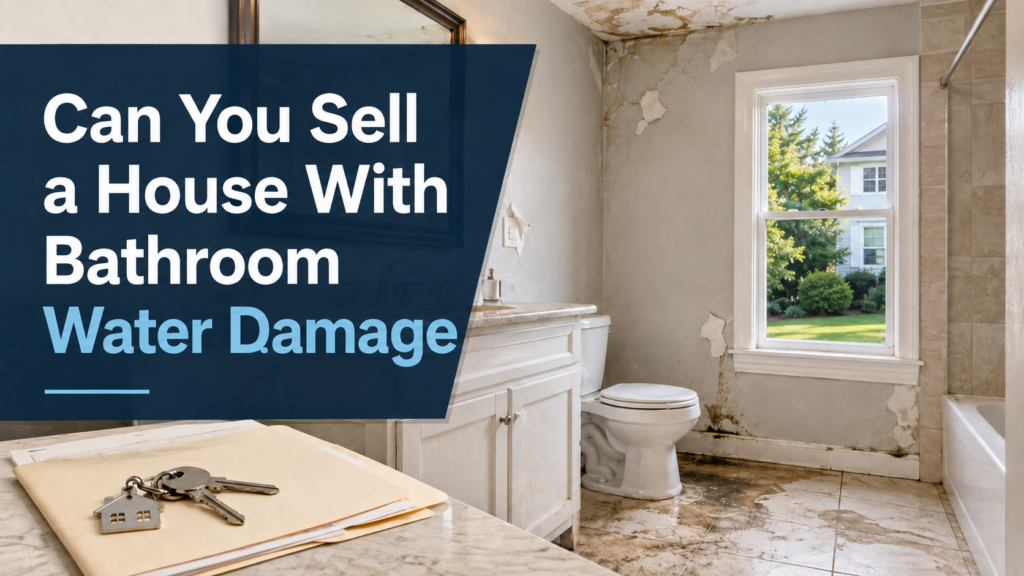
Yes, you can sell a house with bathroom water damage. The damage does not stop the sale, but it can affect buyer interest, inspections, repair requests, appraisal, financing, and closing.
Bathroom water damage can come from a leaking shower, toilet overflow, pipe leak, bad caulking, poor ventilation, water under flooring, or mold.
The real issue is who pays for the damage and when. You can repair the bathroom, list with honest disclosure, offer a repair credit, lower the price, or sell the house as-is.
This guide breaks down what can happen next and how to choose the right selling path.
How to Spot Bathroom Water Damage Before Buyers Do
Bathroom water damage gives you more control when you find it before a buyer does.
You can decide how to handle it, price it, disclose it, or fix it before it turns into a bigger issue during inspection.
Look for these signs of bathroom water damage:
- Soft or spongy flooring around the toilet.
- Swollen vanity cabinets.
- Peeling or bubbling paint.
- Stained ceiling in the room below an upstairs bathroom.
- Loose tiles or tiles that sound hollow when tapped.
- Cracked or missing grout.
- Musty smells after the bathroom has been closed up.
- Mold near the tub, shower, toilet, or baseboards.
- Water-damaged subfloor visible from a basement or crawl space below.
- Stained drywall.
| Expert Advice: Before you list the house, run the shower for 10 minutes and flush the toilet twice. Some bathroom leaks only show when water is moving through the lines, around the toilet base, or behind the shower wall. |
Common Bathroom Problems That Cause Water Damage
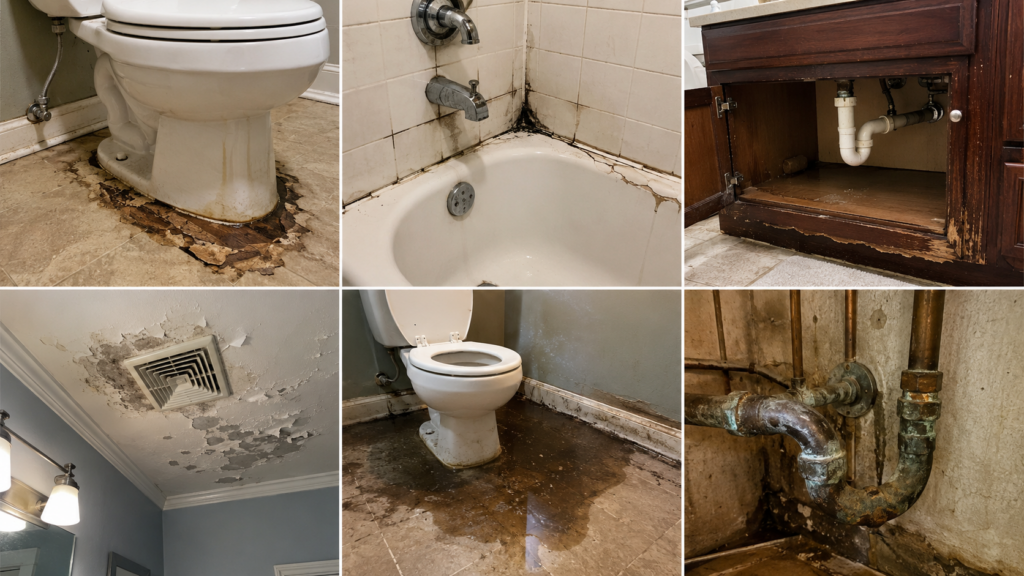
Bathroom water damage can move fast, especially when moisture sits behind flooring, walls, or cabinets.
The EPA says wet or damp materials should dry within 24 to 48 hours after a leak or spill to help prevent mold growth.
If the damage has been there longer, you may need to think beyond a simple cleanup.
1. Leaky Toilets
A toilet leak can start small and still damage the floor under the bathroom. Common causes include a failed wax ring, a loose toilet that rocks when used, a cracked tank, or a slow leak that runs without making much noise.
The real risk is the subfloor. A cheap wax ring left leaking for months can soak the wood around the toilet base.
By the time the floor feels soft, the repair may no longer be a simple plumbing fix. It may require flooring, subfloor, and odor control work before a traditional buyer feels comfortable.
2. Shower and Tub Leaks
Shower and tub leaks often come from failed caulking, cracked grout, a bad shower pan, or plumbing inside the wall. If the bathroom sits upstairs, the first clue may be a stain on the ceiling below.
These leaks are easy to miss because they often happen only when water is running.
You may not see an issue during a quick walk-through, but an inspector may find it after testing the shower or tub.
3. Sink and Vanity Leaks
Sink leaks often start under the vanity. A loose P-trap, slow drain leak, or failing supply line can leave moisture sitting inside the cabinet long before it reaches the floor.
Before listing, empty the vanity and keep it dry for a week. If new moisture appears, the leak may still be active.
That simple check can help you avoid a late repair request.
4. Poor Bathroom Ventilation
Poor ventilation can keep moisture in the bathroom long after the shower is off. That can lead to recurring mildew, peeling paint, damp walls, and moisture damage around trim or ceilings.
The CDC recommends using exhaust fans in bathrooms that vent outside the home to reduce moisture and mold.
A fan that vents into the attic can still create concern because the moisture has not left the house. Inspectors may see that as an active moisture issue, not a past leak.
5. Toilet Overflow or Sewage Backup
A toilet overflow can send a large amount of water across the bathroom floor in minutes. If the water reaches flooring, trim, drywall, or the room below, the cleanup can become more serious than a small leak.
Sewage backup is different from clean-water damage. Contaminated water needs remediation, not just drying.
Buyers and inspectors usually treat it as a bigger cleanup issue because it can affect sanitation, odor, flooring, and hidden materials.
6. Old Plumbing
Older plumbing can make bathroom water damage harder to explain. Aging pipes, loose fittings, DIY repairs, and hidden in-wall leaks can raise questions even after one leak has been fixed.
That is the bigger issue. Old plumbing can make buyers think the bathroom problem is part of a larger system issue.
So even a completed repair may not remove the concern if the pipes, fittings, or past repairs still look unreliable.
How Water Damage in Bathroom Can Affect a Traditional Home Sale
Bathroom water damage can change the sale because buyers do not price only what they see. They price what they fear.
A small stain can turn into a much larger negotiation if someone thinks there may be hidden mold, rotten subflooring, an active leak, poor repairs, or a bigger cost waiting after closing.
1. Buyer Showings
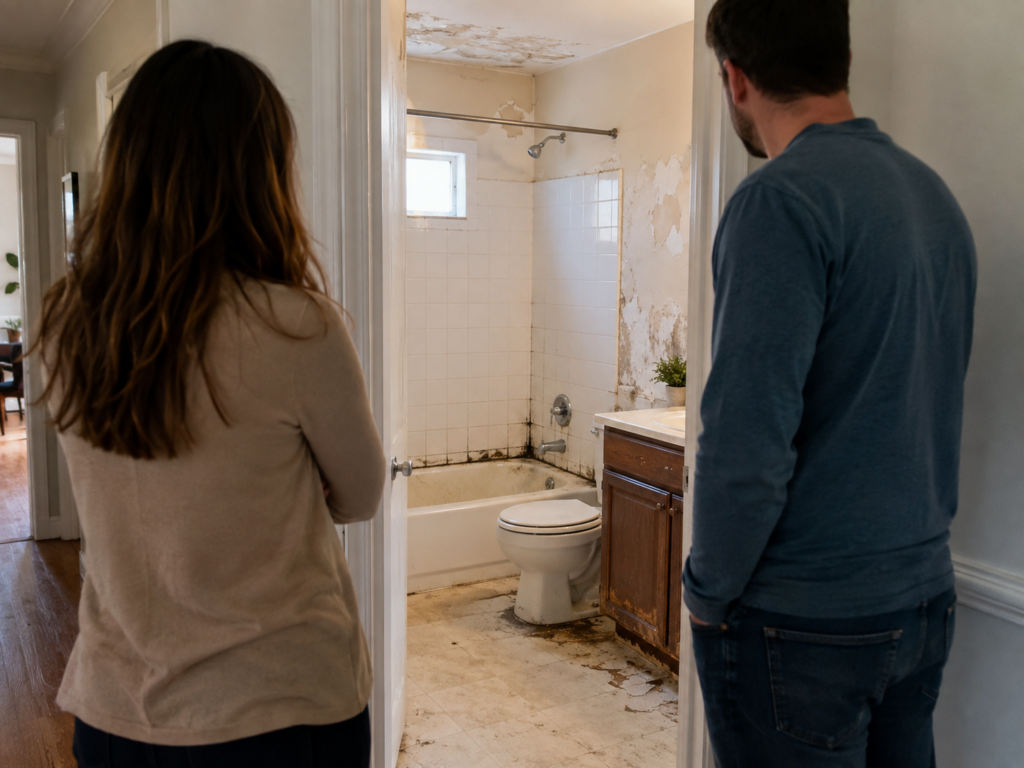
Bathroom water damage can reduce buyer interest before a conversation even starts. Some buyers decide the house needs more work than they want to handle and move on without asking questions.
That means you lose the chance to explain the cause, share repair records, or discuss the issue before they remove your home from their list.
2. Home Inspection Issues
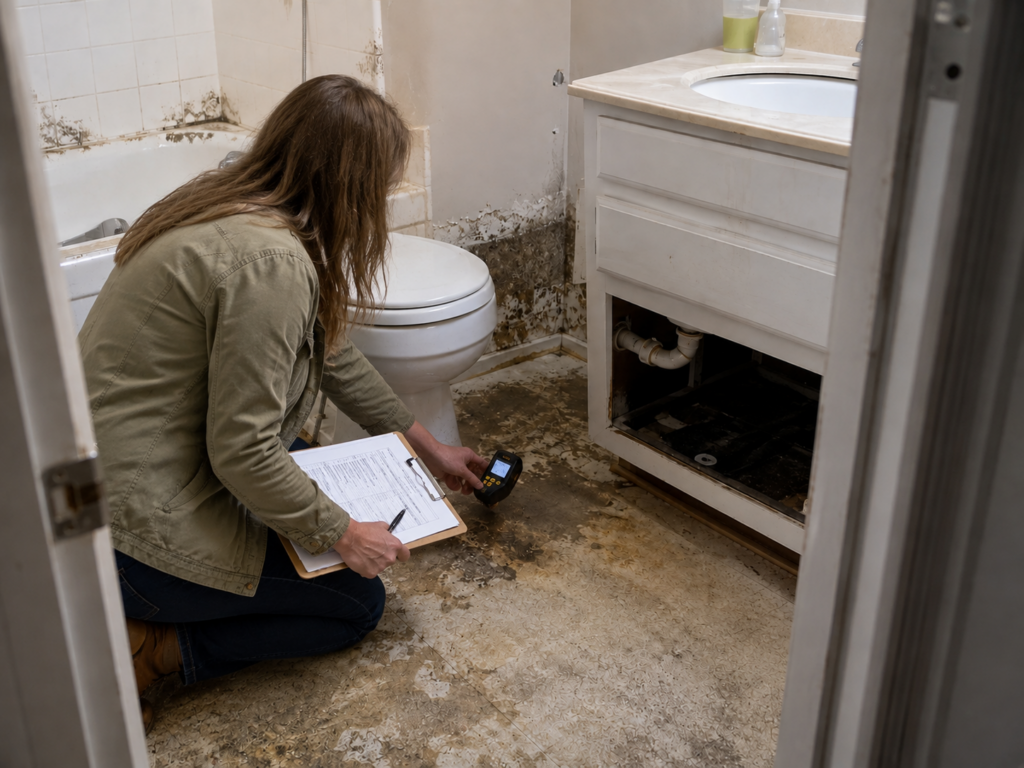
A home inspector may flag moisture readings, soft flooring, stains, mold-like growth, or plumbing concerns. Even if the issue looks small, the report can make it harder to keep the deal intact.
If the buyer walks away after inspection, the problem does not disappear. You now know about it, which may affect what you disclose to the next buyer.
3. Buyer Financing Concerns
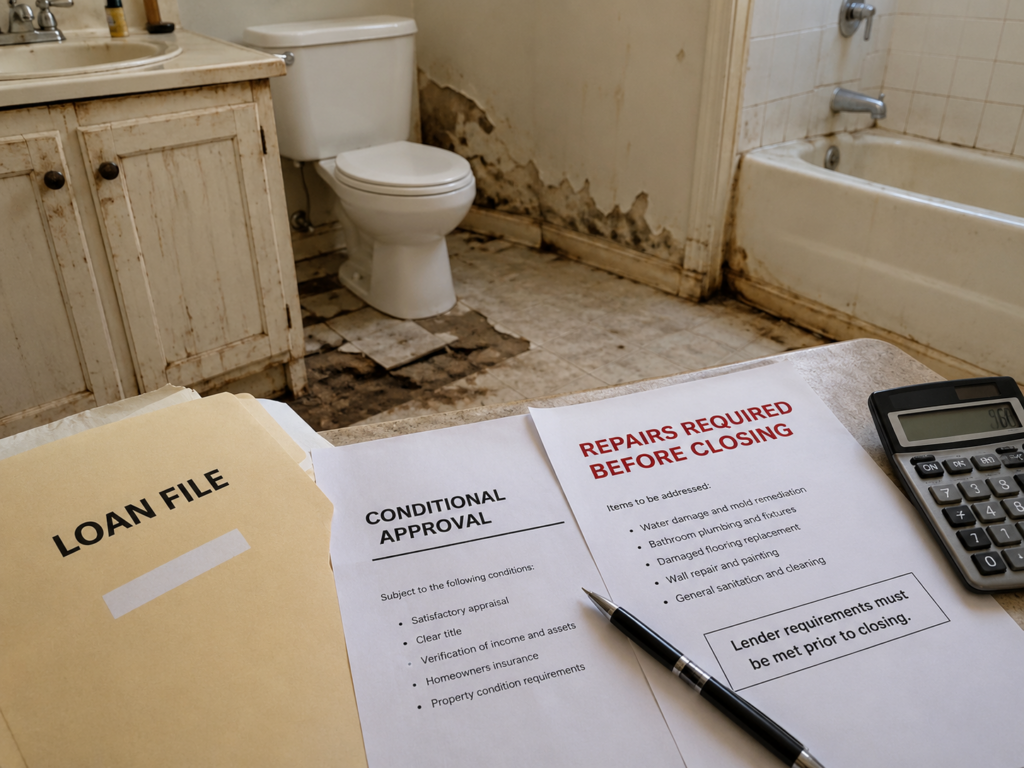
A lender can raise concerns even when the buyer wants to move forward. If bathroom water damage affects livability, flooring, plumbing, or sanitation, the lender may require repairs before closing.
This depends on the severity of the damage, the loan type, and what the appraisal or inspection finds.
Should You Fix Bathroom Water Damage Before You List?
No, you do not always need to fix bathroom water damage before selling. The best choice depends on the size of the damage, your timeline, your budget, and the type of sale you want.
When Repairs May Make Sense
Repairing the bathroom may be the better choice when:
- The leak is small.
- The source is known.
- You have money for the repair.
- You have time before listing.
- There is no mold concern.
- You want to attract more buyers who need financing.
When Repairs May Not Make Sense
Repairing the bathroom may not be the best choice when:
- The leak source is unknown.
- The floor feels soft.
- Mold keeps coming back.
- Old plumbing is involved.
- The repair may require opening walls or flooring.
- The property is inherited, vacant, tenant-damaged, or already needs several repairs.
- You want a faster sale.
What Washington and Idaho Sellers May Need to Disclose
Disclosure rules vary by state, so sellers should complete the required forms truthfully based on what they know.
Disclosure does not stop a sale. In many cases, a problem that is disclosed early and reflected in the price is easier to work through than one discovered after the home goes under contract.
Washington Seller Disclosure
Under RCW 64.06.020, Washington sellers need to disclose known issues with plumbing systems, pipes, faucets, fixtures, toilets, flooding, standing water, drainage problems, material damage, and environmental concerns.
That makes bathroom water damage relevant when it involves a leak, damaged flooring, hidden moisture, mold concern, or past repair work.
Idaho Seller Disclosure
Under Idaho Code 55-2508, Idaho sellers disclose known issues involving basement water, plumbing, drainage, and other property conditions. The form also asks about substantial additions or alterations completed without a building permit.
That can matter if a past bathroom remodel, plumbing repair, or renovation was completed without the required permits.
Your Options If You Do Not Want to Repair the Bathroom
You do not have to repair bathroom water damage before selling. You can sell with the issue in place, but each path affects price, buyer confidence, timing, and closing risk in a different way.
Here are some options for you to consider:
Option 1: List the House and Offer a Repair Credit
You can list the house and offer the buyer a repair credit at closing. This lets the buyer handle the bathroom repair after purchase instead of asking you to complete the work before listing.
The downside is that buyers may still fear damage beyond the credit amount. Some loan programs may also require repairs before closing, even when a credit is offered.
Option 2: Lower the Asking Price
You can lower the asking price and let the buyer take on the bathroom repair after closing. This can make sense when you do not want to manage contractors or delay the sale.
The discount often needs to be larger than the repair estimate because buyers’ price is at risk. A lower price also does not remove inspection issues or lender repair requests.
Option 3: Sell to an Investor
You can sell the house to an investor who buys properties with repair issues. This may reduce the need to fix the bathroom before closing, but you still need to check the offer terms carefully.
Before accepting, ask for:
- Proof of funds.
- Inspection terms.
- Closing timeline.
- Any fees.
- Who pays closing costs.
- Confirmation that the buyer can close without lender approval.
Watch for the re-trade. Some investors make a strong first offer, then use the inspection period to lower the price late in the process.
Option 4: Sell As-Is to a Cash Buyer
A cash buyer is often the simplest option when you do not want to repair bathroom water damage. Cash home buyers purchase houses as-is, which means you can sell without fixing the bathroom before closing.
This helps you avoid bathroom repairs, contractor delays, mold cleanup before listing, open houses, repair credits, inspection renegotiations, and lender repair conditions.
This option can also work if the house has soft bathroom flooring, mold concerns from old leaks, plumbing problems, or unfinished repairs.
Conclusion
You can sell a house with bathroom water damage. The best path depends on the damage, repair cost, timeline, and how much work you want to handle before closing.
You can repair the bathroom, disclose the issue and negotiate, offer a repair credit, lower the price, sell as-is, or request a cash offer.
Waiting can make the problem more costly when soft flooring, mold, old plumbing, toilet overflow damage, or hidden moisture is involved.
Get a Cash Offer for Your Bathroom Water Damaged House
Liberty Fair Offer buys houses in Washington and Idaho with water damage, plumbing issues, bathroom repairs, mold concerns, and unfinished work.
Contact us to see what an as-is sale could look like.