
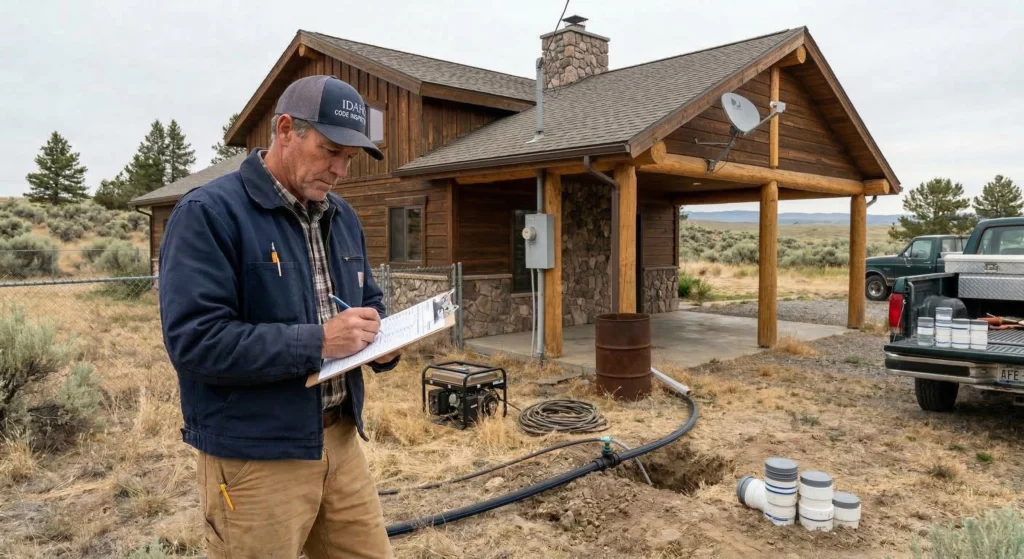
In Idaho, it is illegal to live in a home without running water. There are certain local ordinances and regulations that enforce mandatory water access.
Building and health codes in Idaho, particularly within city limits and urban areas, typically require running water for a home to meet occupancy standards.
Failing to comply can result in condemnation or a prohibition on occupancy, even if it is not treated as a criminal offense.
In this blog, we explain Idaho laws and local rules on running water in residential homes. You’ll learn what to check to stay compliant and avoid legal issues.
Idaho Rules and Regulations on a Functioning Water System
While there is no single statute in Idaho explicitly forbidding someone from living in a house without running water, various laws and regulations indirectly require a functioning water system for residential occupancy.
These standards are enforced through habitability codes, plumbing regulations, and health and welfare statutes.
- Implied Warranty of Habitability
Under Idaho Code §6-320, landlords are obligated to ensure that plumbing, including the water supply, is “in good working order.”
This law is part of the implied warranty of habitability, which guarantees that a property meets basic living conditions, including access to running water.
- Health and Safety Regulations
Second, Idaho has separate health and safety laws that apply to licensed residences. These rules reinforce the requirement for proper water access.
For instance, under Idaho’s certified family home regulations, all plumbing must be fully functional.
The water supply itself must be “adequate, clean, and safe” for use.
These standards show that, in regulated residential settings, access to safe running water is not optional. It is a required condition for legal operation.
- Municipal-Level Regulations
At the local level, most cities and counties in Idaho have their own ordinances requiring a potable water supply before occupancy. For example:
- Twin Falls City Code §7-8-3 makes it unlawful for an occupied home to lack a public or approved private water supply.
- Spirit Lake City Code under 7-4-9 declares: “The human habitation of any residential dwelling… without a required source of running potable water… shall be unlawful and subject to penalty.”
| Note: Most Idaho cities also require a certificate of occupancy to be issued only after ensuring the property has an approved water source. Be sure to check with your local city, town, or county for specific water connection requirements and regulations that may apply to your property. |
Potential Legal Consequences of Living in a Property Without Running Water
Here are some of the legal consequences you can face when living in a house without water:
1. Fines and Restrictions Due to Building Code Violations
If a home is built or modified without a functional water system, it may fail inspections and not receive a certificate of occupancy, making it illegal to occupy.
Impact: Fines from local authorities, and the property may be prevented from being sold or used as collateral until compliance is met.
2. Risk of Lawsuits and Lease Termination for Habitability Violations For Landlords
Under Idaho’s implied warranty of habitability, landlords must provide homes with running water. If the property lacks water, it becomes uninhabitable, violating this warranty.
Impact: Tenants can sue the landlord or terminate the lease without penalty if the home is uninhabitable due to lack of water.
3. Fines and Eviction Risk Due to Zoning Violations
Local zoning ordinances in certain towns and cities in Idaho require properties to be connected to utilities like water for residential use. Attempting to occupy a property without a water connection could lead to legal action.
Impact: Fines, a cease and desist order, and possible eviction for failing to connect the property to the required water supply.
4. Property Condemnation Due to Lack of Running Water
In extreme cases, homes without running water are considered unfit for habitation by local authorities, leading to condemnation.
Impact: The property is considered unsafe for human habitation, and occupancy is prohibited until the home complies with safety and health standards.
5. Fines and Forced Connection for Failing to Connect to Public Utilities
Cities like Pocatello and Twin Falls require properties to be connected to municipal water systems. Non-compliance can result in legal penalties.
Impact: Fines, the imposition of a lien on the property, and the forced connection to the water system at the owner’s expense.
What Happens If Your House Lacks a Water Supply, Even When Unoccupied?
In Idaho, no state law makes it illegal to own an unoccupied property without a water supply. But you cannot rent it out without running water.
According to Idaho Code § 55-103, any individual can own, hold, and dispose of real property unless a specific restriction applies, such as those related to foreign ownership or zoning laws.
What Challenges You Can Face When Owning a Property Without Water?
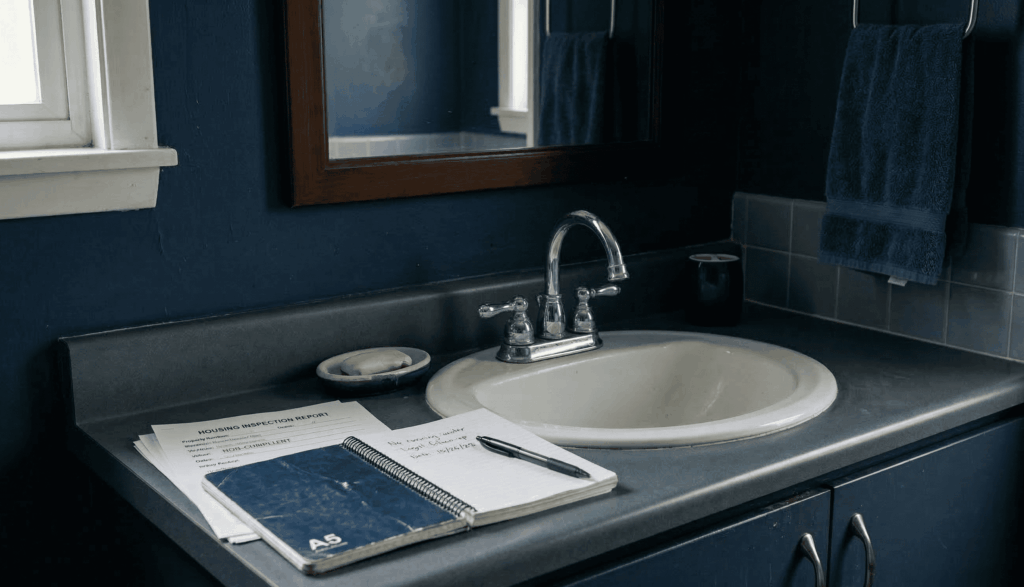
Besides legal issues, here are some other issues you might face:
1. Habitability Concerns
Idaho’s habitability codes require that a property meets basic living standards, and running water is a key element of those standards.
Without access to water, your property may be deemed uninhabitable, meaning it could be illegal to occupy or rent the home.
2. Difficulty Securing Tenants
Even if you are legally allowed to own the property without water, potential renters may be unwilling to live in a home without a reliable water supply.
This can make it difficult to rent the property, limiting your ability to generate rental income.
Furthermore, If the home does not have running water, when it is occupied by someone other than an owner, tenants can take legal action against you.
3. Municipal Fines and Penalties
At the local level, cities and counties may impose penalties for not having an approved water supply, especially if the property is occupied or used for business purposes.
Failure to comply with these regulations can result in fines, citations, or orders to connect to the water supply.
4. Property Value Issues
A lack of running water can negatively impact the marketability and resale value of the property.
If you plan to sell, buyers may be deterred by the cost and effort of fixing the water issue, leading to reduced offers or difficulty selling the home at all.
What Are Your Options If You Can’t Secure Running Water?
1. Install Alternative Water Systems (e.g., Wells or Rainwater Collection)
If public water is unavailable, consider installing an alternative water system, such as a well or rainwater harvesting system.
These can provide water for daily use and may meet legal requirements depending on local regulations.
Note: Check your local water safety and health standards for running water.
2. Sell the Property for Cash
Selling the property for cash is a viable option if securing a water connection is impossible or too costly.
Cash buyers may be more inclined to purchase without a water connection.
3. Seek Temporary Water Supply Solutions
For properties awaiting connection to the water supply, temporary water solutions like water hauling or portable water tanks can provide water in the meantime while waiting for a permanent solution.
4. Explore Off-Grid Living and Minimalist Housing
If the property is in a rural area, you may want to explore an off-grid lifestyle, which includes using solar energy, septic systems, and other alternative utilities to reduce dependency on public services.
Note: Always check your local city, town, or county codes to confirm whether an off-grid water system is allowed. Some areas require connection to public water if it is available, even if you prefer an alternative supply.
5. Work with Local Authorities to Find a Solution
Contact local municipalities for potential assistance programs or solutions to connect your property to the water supply, especially if you are in a rural or developing area.
6. Develop the Property with Water Source Access
If the property is in an area with potential for future development, consider developing the land to include a water source or purchasing nearby land with water access to make the property more viable.
Is Going Off-Grid an Option in Idaho?
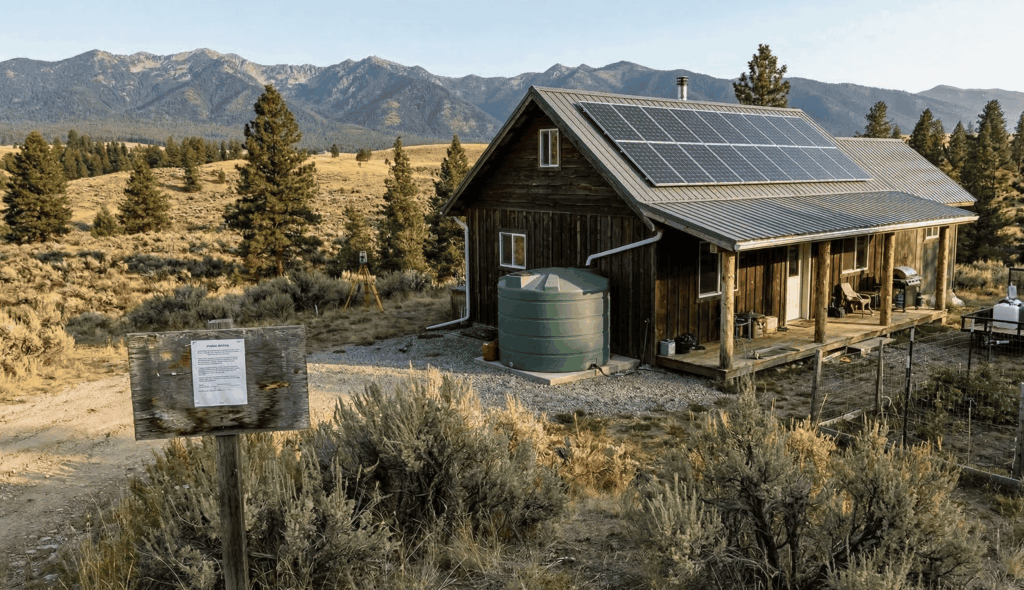
Off-grid living is legal in Idaho. The state does not prohibit individuals from living independently from public utilities, such as water, electricity, or sewer.
You can use alternative systems to support an off-grid lifestyle.
But they are not allowed for everyone.
When It’s Allowed:
- Rural and Unincorporated Areas: Many rural counties in Idaho have minimal zoning and building regulations, making off-grid living more flexible and less restrictive.
- Local Regulations: As long as you meet local zoning codes, building standards, and basic safety codes, living off-grid is permissible.
While off-grid living is allowed, it’s not always easy or permitted in all cases:
When It’s Not Allowed:
- In City Limits: If you plan to live in a city or urban area, there are stricter building codes and zoning regulations that typically require utility connections (such as water, sewer, or electricity).
- Cities like McCall and Pocatello mandate that homes, even off-grid ones, are connected to public utilities.
Partner with Liberty Fair Offer for a Practical Exit When Water Compliance Isn’t Feasible
If you cannot afford to install a water connection, drill a well, or bring the property into compliance with local codes, selling may be the most practical path forward.
At Liberty Fair Offer, we review your situation, explain your options clearly, and help you determine the best way forward.
- No Repairs, Sell the Property As-Is
Liberty Fair Offer purchases properties in their current condition. You do not need to make repairs, complete upgrades, or prepare the home for showings. We make a direct offer based on the property as it stands.
- A Simple and Transparent Process
We keep the process straightforward. You receive a clear offer with no hidden terms. We walk you through each step so you know exactly what to expect.
- No Commissions. No Closing Costs. No Open Houses.
We do not charge agent commissions. We cover standard closing costs. You won’t host open houses or schedule multiple showings. You choose the closing timeline that works best for you.
If you are considering selling, contact us now for a no-obligation cash offer and move forward with certainty. We review your property and provide a clear path forward so you can move on with confidence.